Serengeti vs Ngorongoro: Which Safari Experience Is Right for You?
We get asked “Serengeti or Ngorongoro?” a lot, and the honest answer for most people is: both, if you can. They’re next to each other, and they’re so different that each makes the other better.
But if you only have time or budget for one, or you’re trying to decide how many days to give each, here’s how they really compare.
The short version
The Serengeti is about space. Huge open plains, granite outcrops called kopjes, and a horizon that goes on forever. The animals are spread out and you drive to find them. What you get in return is scale: big cats hunting, and depending on the month, a million wildebeest on the move.
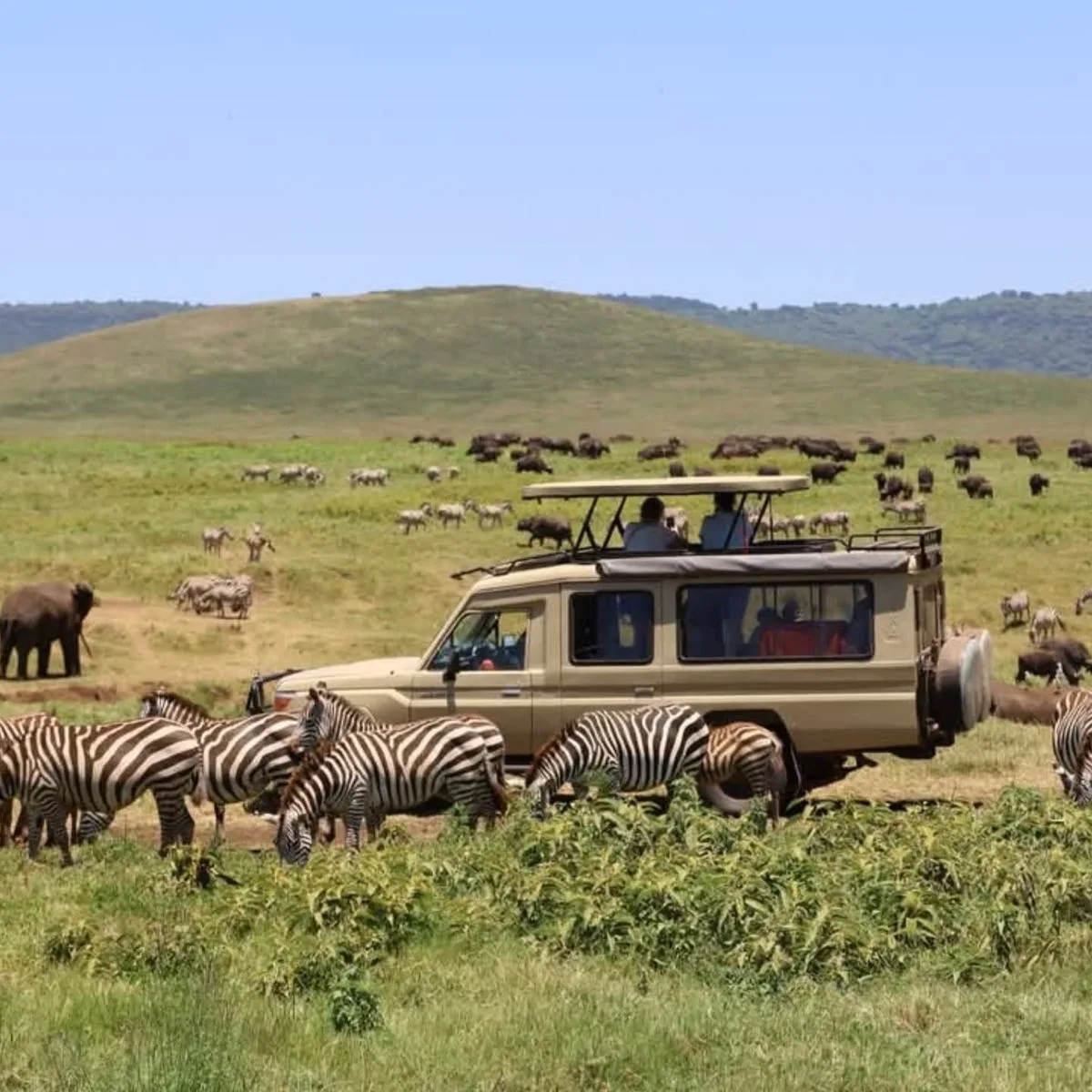
Ngorongoro is about density. You drive down into a collapsed volcanic caldera, with walls rising all around you, and inside is one of the densest concentrations of wildlife in Africa. In a single day you can see lion, elephant, buffalo, hippo and flamingos, and it’s one of the best chances anywhere in Tanzania to see a rhino.
Wildlife: hunting vs. everything at once
In the Serengeti, lions, cheetahs and leopards range over huge territories. You might spend an hour searching, then find a cheetah on a termite mound watching gazelles, and stay for another hour to see what happens. When the herds are around, the predator action is the best in the country. That’s why the timing of a Serengeti safari matters so much (our month-by-month guide covers it).
A Ngorongoro Crater safari works the other way round. The animals live in the crater all year, so there’s no bad month, and you don’t have to search much. It’s a great day for first-timers, for anyone short on time, and for photographers who like predictable movement. The trade-off is that you won’t be alone. The crater is popular, and you’ll share sightings with other vehicles, especially in peak season.
How it feels to be there
Serengeti game drives feel like an expedition. Long days, dust, big skies, sunsets you’ll talk about for years. You need a few days to get into its rhythm.
Ngorongoro feels like a different world. The view from the crater rim is worth the trip by itself, and the drive down feels like going into a hidden valley. Most visits are one full day on the crater floor with your guide, then back up to the rim for the night.
So which should you choose?
- Only one, and you want the migration or big-cat drama: the Serengeti.
- Only one, short on time, and you want as many animals as possible: Ngorongoro.
- Everyone else: both. Two or three nights in the Serengeti and a day in the crater is the classic combination for a reason.
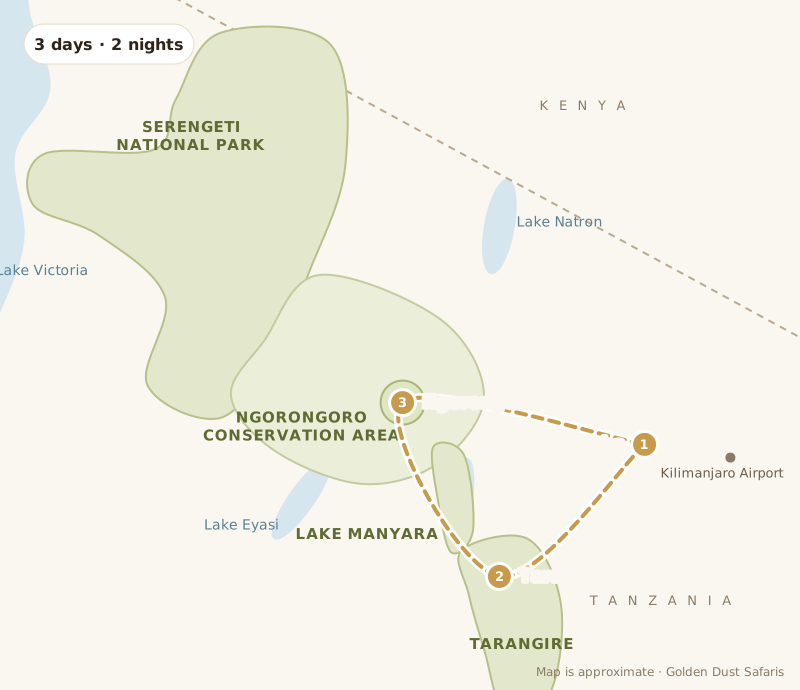
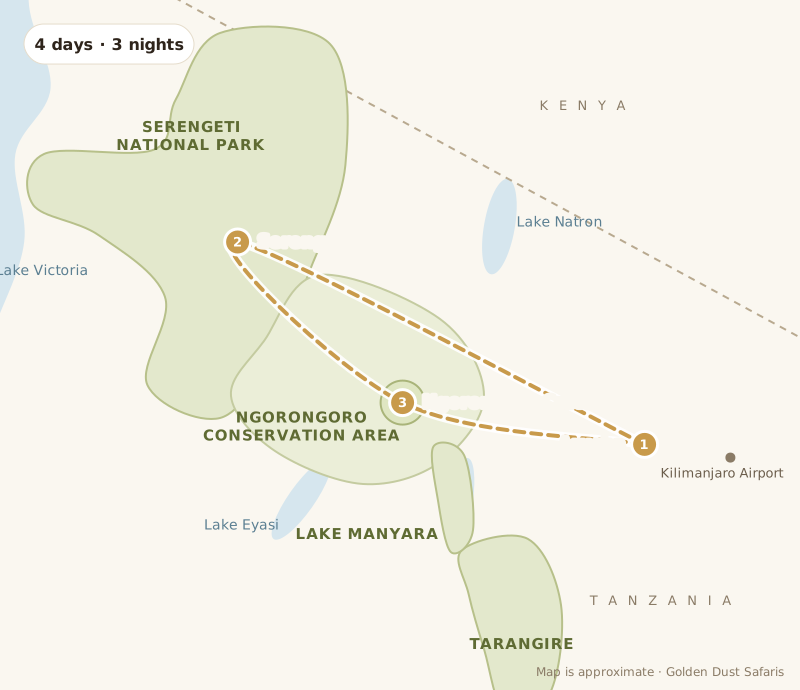
Our Serengeti vs Ngorongoro safari puts the two together in four days. If you have five, our Ngorongoro Crater safari adds Tarangire and its elephants. Tell us how much time you have and how much driving you’re happy with, and we’ll get the balance right.
FAQs
1. What is the main difference between Serengeti vs Ngorongoro?
Scale. The Serengeti is huge, open plains where the herds move with the seasons and you drive to find the animals. Ngorongoro is a volcanic crater where a lot of wildlife lives in a small area, so you see a lot in one day.
2. Is the Ngorongoro safari better for first-time travelers?
It’s a great first day. You see a lot without much driving, which is a good introduction. But we wouldn’t skip the Serengeti on a first trip if you have the time.
3. Can I combine Serengeti and Ngorongoro in one trip?
Yes, and most of our guests do. They’re next to each other, so they fit naturally into one itinerary.
4. What is special about the Ngorongoro Crater safari?
You’re driving on the floor of a collapsed volcano, surrounded by crater walls, with one of the densest concentrations of wildlife in Africa. It’s also one of the best places in Tanzania to see rhino.
5. How does Golden Dust Safaris help plan these trips?
We build every itinerary around you: how much time you have, what you want to see and how much driving you’re happy with. Then we get the balance between the Serengeti and the crater right.